
Flowchart
“What happens… after?”

She thought they were mosquito bites at first: two dime-sized wounds on the back of her hands after a long weekend at the cabin in July. They were still there in November, so she went to get them looked at. “I’m not scratching them,” she told the Urgent Care doctor. “They don’t itch. They just won’t go away.”
The doctor prescribed a broad-spectrum topical antibiotic. “If they haven’t cleared up in a couple of weeks, make an appointment with your primary care physician,” he said. “Or maybe a priest.” They both laughed, and the wounds started to bleed.
“That’s… weird,” said the doctor. He gave her a Band-Aid.
In a couple of weeks, when they hadn’t cleared up, she made an appointment with a general practitioner. The GP sent her to a dermatologist, who ordered a comprehensive allergen test panel. When the results came back negative, the dermatologist referred her to a hematologist, and Mina sent an email.
Hi, Father Justin. Do you have time for a quick call in the next day or two? Best, Mina Carpenter
He wrote back immediately: Were you planning to come to Soup & Sung Compline tonight at 7:00? We could meet at church at 6:30.
Mina had not been planning to come to Soup & Sung Compline. She started typing a reply to suggest an alternative, but saw thin trickles of crimson running down her hands. See you then, she wrote hurriedly, clicking Send just before the blood dripped onto her desk.
Mina knocked on the doorframe of Father Justin’s office, and he looked up from his laptop. “Hi, Mina. Come on in. Do you want some coffee? Some water?”
She didn’t. She sat down in a green velvet armchair in the corner, which was either new from Ikea or older than she was. It hadn’t been there the last time she had been in the office, but that had been two Rectors ago for her pre-Confirmation chat.
Father Justin took the armchair facing her. “Good to see you. How are your parents?”
“They’re fine,” Mina told him. “They’re in Arizona already. They’ll come back up in a few weeks, though, so we’ll be here for Christmas Eve.”
“I always enjoy seeing them,” Father Justin said. “They’ve been members of St. Non’s for, what, thirty years now?”
“Yeah, about that. They started coming here before I was born.”
“That’s great.” He paused. “So what’s up, Mina? Wait—let’s start with a prayer.”
Mina held her hands open, palms up, which was a posture of prayer, but also hid her wounds.
“Creator and Comforter, bless Mina and strengthen her, and be in the midst of our conversation. Amen.”
“Amen,” Mina echoed. She cleared her throat. She looked down at her hands and then turned them over. “I’m not really sure what to say.”
“I see your hands, Mina,” Father Justin said gently. “I’m here to listen.”
Mina told him that the wounds had been there for six months, that they wouldn’t go away, that she didn’t know why, but that she knew they were something. She started to cry, then collected herself. “I’m sorry,” she said. “I just don’t know what’s happening.”
Father Justin handed her a tissue from a box on the coffee table. “God can handle our pain, Mina, if we let God. And God has given us tools to help us carry our burdens. Have you spoken to someone about these… coping mechanisms?”
“What?” she said. “I’m not doing this.” She gripped the arms of the green velvet armchair; her knuckles were white and her wounds raw and meaty.
“Let’s just hold some space.”
Mina sat up and held out both hands. “Look.”
They watched as the blood ran in rivulets, quietly, steadily, dripping onto the rug.
“I didn’t do that,” Mina said.
Father Justin took two more tissues, folded them into thirds, and then thirds again. “Okay,” he said, holding them out to her. “Wow. I’ll call the Bishop.”
There was a knock at the door. “Soup’s on. It’s Chicken Wild Rice.”
“This is so good, Marylou. I love Italian Wedding Soup.”
“Thanks. The meatballs are store-bought.”
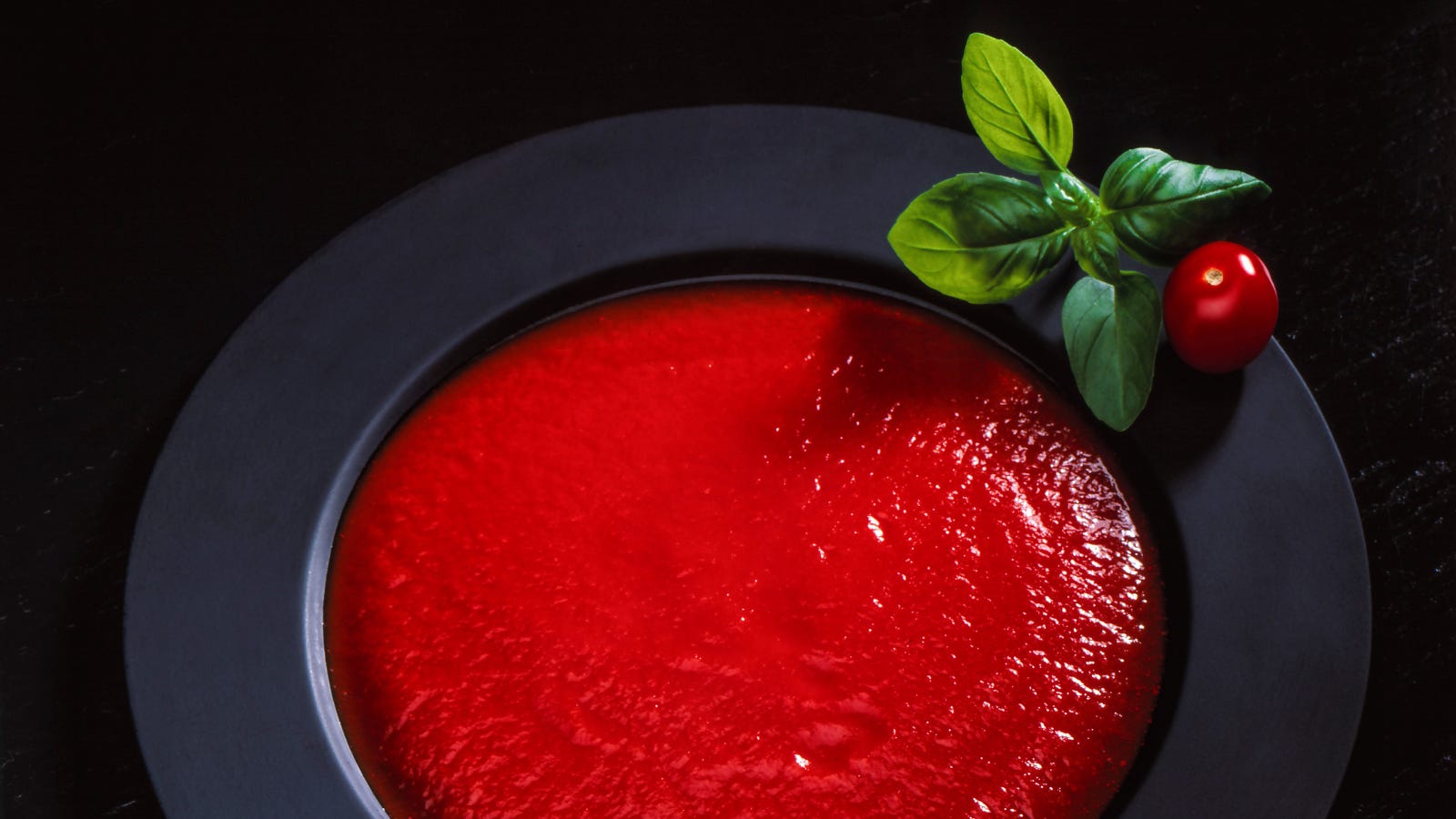
“I wouldn’t have known if you hadn’t told me. And it’s perfect for tonight,” Mina said. “Was it only last week that I brought Gazpacho?”
October had brought with it the first chilly Wednesday of the winter, and the soups at Soup & Sung Compline were getting heartier. Mina had attended every week for ten months.
Father Justin sat down next to Marylou. Mina passed him the baguette, bag-side first; he tore off a chunk and put it down on the empty placemat next to him. They always set six places, optimistically, but they were almost always three.
“Busy day?” asked Marylou, the senior warden.
“Yep,” said Father Justin. “Always.” He poured some water into a pink plastic tumbler, and then took a bite of soup. “This is good, Marylou.”
Mina didn’t ask if there was an update; Father Justin would have mentioned it if there had been. They ate their soup, put their bowls in the dishwasher, and filed silently into the darkened sanctuary.
In the first few months after Mina had gone to Father Justin, there had been a lot of activity. She had been examined by several professionals, including a bi-vocational priest/forensic pathologist from the Diocese of Maryland. Hypodermal tissue around perimeter displays no indication of trauma consistent with puncture, she had concluded. Proximate cause remains unknown. The Bishop had personally accompanied Mina to the Mayo Clinic, where the nation’s preeminent wound specialist pronounced her clotting agents and white blood cell counts to be within normal limits: Wounds are chronic, showing idiopathic persistence. Both doctors authored journal articles about her case.
Other articles had been written, as well. Historically, the majority of people experiencing stigmata have been female, and yet nearly all of the literature centers around the few instances involving European men. The author hadn’t contacted Mina for comment. A feud erupted between bloggers; one implied that ‘the case in Minnesota’ was a stunt because the Bishop had her eye on a larger Diocese, and another implied that the first blogger had her eye on the President of the House of Deputies spot. Neither of them had contacted Mina for comment, either.
The local newspaper did contact Mina for comment. A staff reporter, acting on “an anonymous tip,” had come for soup on the Wednesday before Ash Wednesday. He took lots of notes and a second helping of Corn Chowder, and the article was published on Thursday. Father Justin and Marylou assured her that the resulting story did not accurately reflect the conversation that had taken place. The Bishop had also been featured, not altogether flatteringly, and after that, there had been no more anonymous tips.
“You should come on Sunday,” Father Justin said. “I’m preaching on the hemorrhaging woman.”
“So I can be your visual aid?” Mina ladled some Cream of Asparagus into her bowl.
Father Justin smiled, but pressed. “No, so you can be there. In a pew, with the lights on, with more than three people in church.”
“I like Wednesdays because there are only three people in church. Compline is where I…” How to explain?
The Compline on that first Wednesday had been restorative. The candlelight calmed her, flickering up the water-stained walls to dance across the chancel ceiling. From her spot in the choir, she looked out across the darkened nave and saw the silhouette of the rood cross magnified in shadow. As dusk settled outside and the stained glass windows grew mute, her heart grew light and her eyes grew heavy. They chanted the Nunc Dimittis, and Mina had departed in peace.
She came back the following week. After a bowl of Butternut Squash Bisque, she entered the sanctuary, expecting the same sense of solace, of silence, of rest.
But it was not the same.
He had been there, really present, and had spoken with her. They had carried on an entire conversation, a long one, between Into your hands and I commend my Spirit. Mina remembered every word, every laugh—he was funny—and, afterward, she knew profoundly. What exactly she knew, she couldn’t articulate, but she knew. And she kept coming back.
“Compline is where I… encounter the Divine,” she finished.
“Encountering the Divine,” said Father Justin, “I hear that. I love the more contemplative parts of our tradition, too. But there’s something about participating in the Eucharist, sharing peace and bread and wine with others, that I find to be really life-giving, as well.”
“What he means is that being part of this church means coming on Sundays,” said Marylou, buttering a piece of sourdough. “Compline is where you encounter the Divine, but the 10:30 is where you encounter the rest of us.”
Mina did go to church that Sunday. The following Tuesday, things started to move.
“Okay, sure, send the first part over, and I’ll take a look.”
Father Justin was coming in over Bluetooth, because Mina was driving. She looked down at her hands, then back up at the road. She fumbled a tissue from the cup-holder-shaped box with her left hand, and dabbed at the back of her right. Then the left-hand wound started up, too, so she pressed the tissue between her steering-wheel hand and her dabbing hand.
“Sorry—say that again? July of next year?” There was an exit coming up, and she took it. The bleeding hadn’t been this bad for a while. There was a Costco at the top of the ramp, and she turned into the parking lot. “Well, I guess it’s something. Thanks.”
Since she was already there, Mina grabbed a tote bag and went inside. It was her turn this week, and she wanted to make Chicken Black Bean Poblano Stew.
When she had finished her shopping, her wounds had slowed down. She unlocked the car and put a rotisserie chicken for the soup and a charcuterie tray for Sunday in the back seat. During Coffee Hour after the 10:30, there had been four types of cookies and some macarons; this week, at least, there would be something savory.
She checked her phone before starting the car. Sure enough, her inbox held an email, and she opened the attachment. It was a one-page PDF in Goudy Old Style with three paragraphs of text under a 20-point header: Concerning Miracles.
I’ll let you know when I get the rest, Father Justin had written. Blessings.
It took several more months, but when the rest was ready, the Bishop brought Mina and Father Justin in to her office to review it. “I’m interested to hear your thoughts,” she said, rotating her monitor outward so they could all see it at the same time.
Mina looked at the screen, looked at Father Justin, looked back at the Bishop, and then started working her way down the flowchart.
There were swim-lanes for functions, rectangles for actions, and diamonds for decision-points, all shot through with arrows. Shares experience with Clergy-In-Charge, said the first rectangle under Inquirer; then Reports to Bishop under Clergy-in-Charge. The Bishop led an Interview, which was housed in a diamond. There was only one arrow leading out: to a rectangle labeled Convene Commission for Evaluation (CfE).
After that, it exploded. There were data-gathering processes, parallelograms and wavy-bottomed rectangles, along with six off-page references to sub-procedures. It was a cacophony of shapes, clustering down and toward the right, but then, as quickly as it had blossomed, it constricted. The process narrowed down to a diamond and then to one final rectangle: License as Miracle.
“It’s very detailed,” Mina said.
They both nodded.
“What happens… after?”
“Well,” said the Bishop, misunderstanding. “The text I sent earlier is already with the Standing Commission on Liturgy and Music. The next step is getting it added to the Book of Occasional Services. There’s still some discussion, as I understand it, but I have a colleague on the commission who has assured me that they will recommend the change. It needs to be ratified at General Convention, and after that, it will be included in the next print edition. The online version will be updated sooner, of course.” She took a breath. “The licensing process itself will be left to the discretion of the dioceses, but by getting this template out now, we’ll have a good chance of setting the standard.”
“I meant,” said Mina, “what happens after licensing?”
There was silence. The Bishop sat back in her chair. “It’s a really great question.”
“It is,” said Father Justin, leaning forward. “We’ve provided guidance concerning miracles. But what do we do concerning Mina?”
A few more beats of silence, and then the Bishop spoke. “What do you need, Mina? From the Church?”
Mina didn’t have an answer.
“Well, think about it and get back to me. We still have a few weeks to finalize.”
The following Wednesday, they had Split Pea and Ham. Mina and Marylou discussed a Buildings and Grounds issue in advance of the next evening’s Vestry meeting and washed the bowls by hand because the dishwasher was acting up. Then Mina lost herself in the darkness as she usually did, expecting him to find her.
He did find her, briefly. What do I need from the church? she asked. I sure don’t need a flowchart. He patted her knee, but didn’t say anything.
She didn’t see him again for almost a month. When he showed up three Sundays later during the Eucharistic Prayer, she almost missed him; Mina had never seen him at the 10:30 before. But he was there, and between which is shed for you and for the forgiveness of sins, they talked. Mina listened, and then, for the first time, she asked him why. He asked why she hadn’t asked before.
Mina didn’t know. She was overwhelmed, for a moment, by just how much she didn’t know.
When the Bishop came to St. Non’s for Soup & Sung Compline, she brought Bouillabaisse and a Sauvignon Blanc. Marylou set out seven wine glasses next to the water tumblers. “What’s the occasion?” she asked.
“Our resolution,” said the Bishop. “It passed last week at General Convention.”
“On the Consent Calendar,” said Father Justin.
“What does that mean?” asked Mina.
“It means,” the Bishop answered, “that there was no debate.”
Father Justin proposed a toast. “To miracles,” he said. Mina lifted her hand to lift her glass, and her wounds began to bleed.
Then she bowed her head as the Bishop said the Grace, and in that moment, Mina knew. She knew what she needed, and more importantly, what she had.
She had him, and she had Compline; she had St. Non’s, and they had her. But the wider Church made St. Non’s possible, which made Soup & Sung Compline possible, which had made him accessible, and when she—and others—knew him individually, the wider Church became inevitable. She didn’t need a flowchart, but someone did.
“… and this we ask in the name of your Son, our Savior, Jesus Christ. Amen.”
Mina raised her eyes and looked around the table. He was there, and they were there, and there were places set for more. There was blood, and there was bread, and there was wine, and there was soup.
“Amen.”
Originally published in Via Media Review: Issue I, 2025.